Wedding Day Shuttle Logistics: A Timeline Guide for Guest Transportation
Of all the moving parts on a wedding day, guest transportation is the one most likely to run late — not because the vehicles are slow, but because the timeline was never actually built with buffer, boarding time, or a plan for the unexpected. Here’s how to put together a shuttle schedule that holds up in the real world, not just on paper.
Start With the Fixed Points, Not the Shuttle Times
Every wedding day has a handful of times that cannot move: the ceremony start, the reception start, and typically the venue’s end-of-night cutoff. Build your transportation timeline backward from those fixed points, not forward from “whenever people are ready.”
For example, if your ceremony starts at 4:00 p.m. and your hotel block is 20 minutes from the venue, your shuttle needs to depart the hotel no later than 3:30 p.m. — not 3:45. That extra 15 minutes covers boarding time, a traffic light or two, and the reality that “20 minutes away” rarely accounts for parking and walking once you arrive.
A Sample Timeline Structure
Every wedding is different, but most guest shuttle schedules follow a similar shape:
- T-minus 45 minutes before ceremony: Shuttle departs hotel(s) for the ceremony venue.
- T-minus 15 minutes: Guests seated, vehicle available to reposition for post-ceremony use if needed.
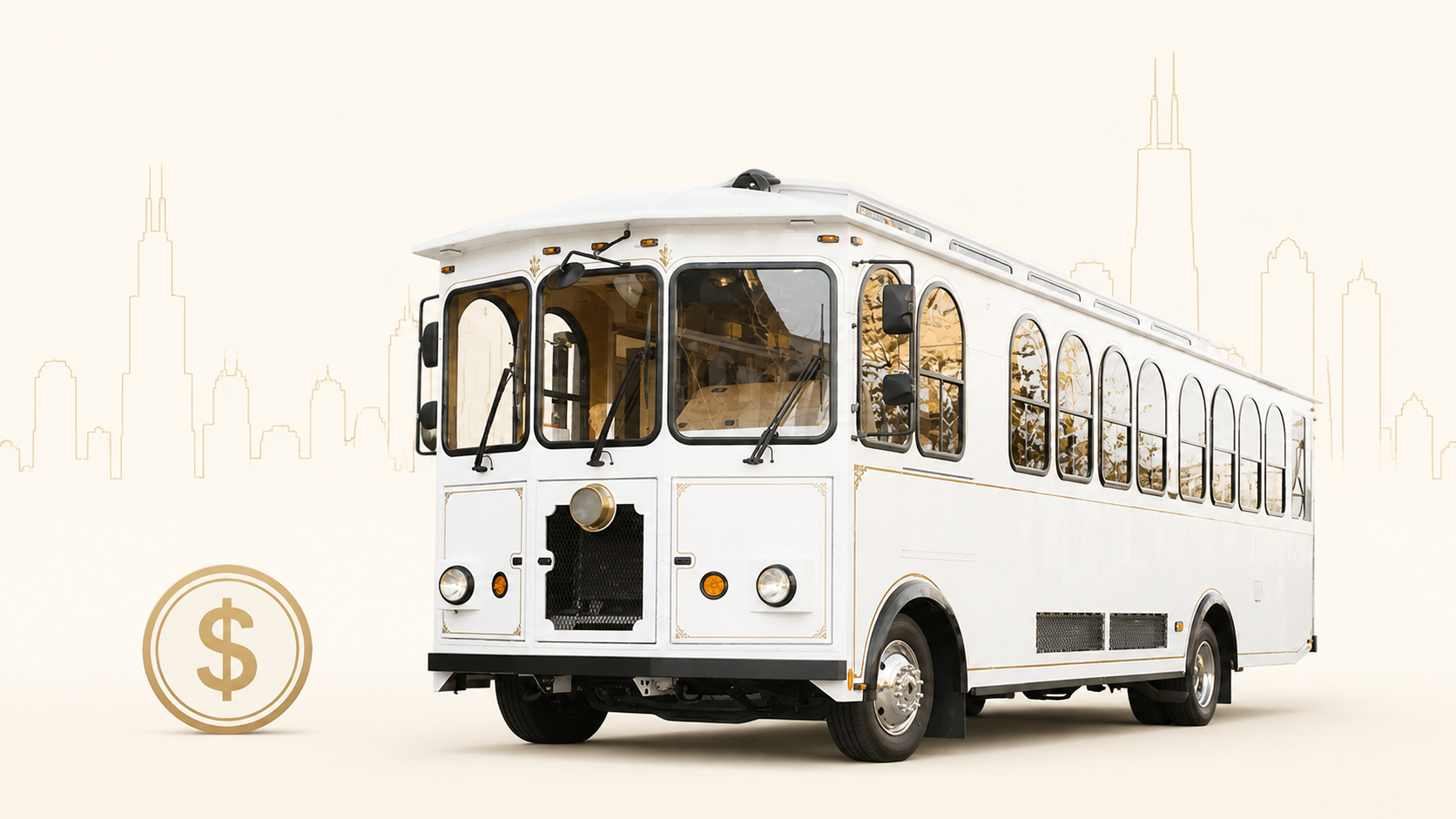
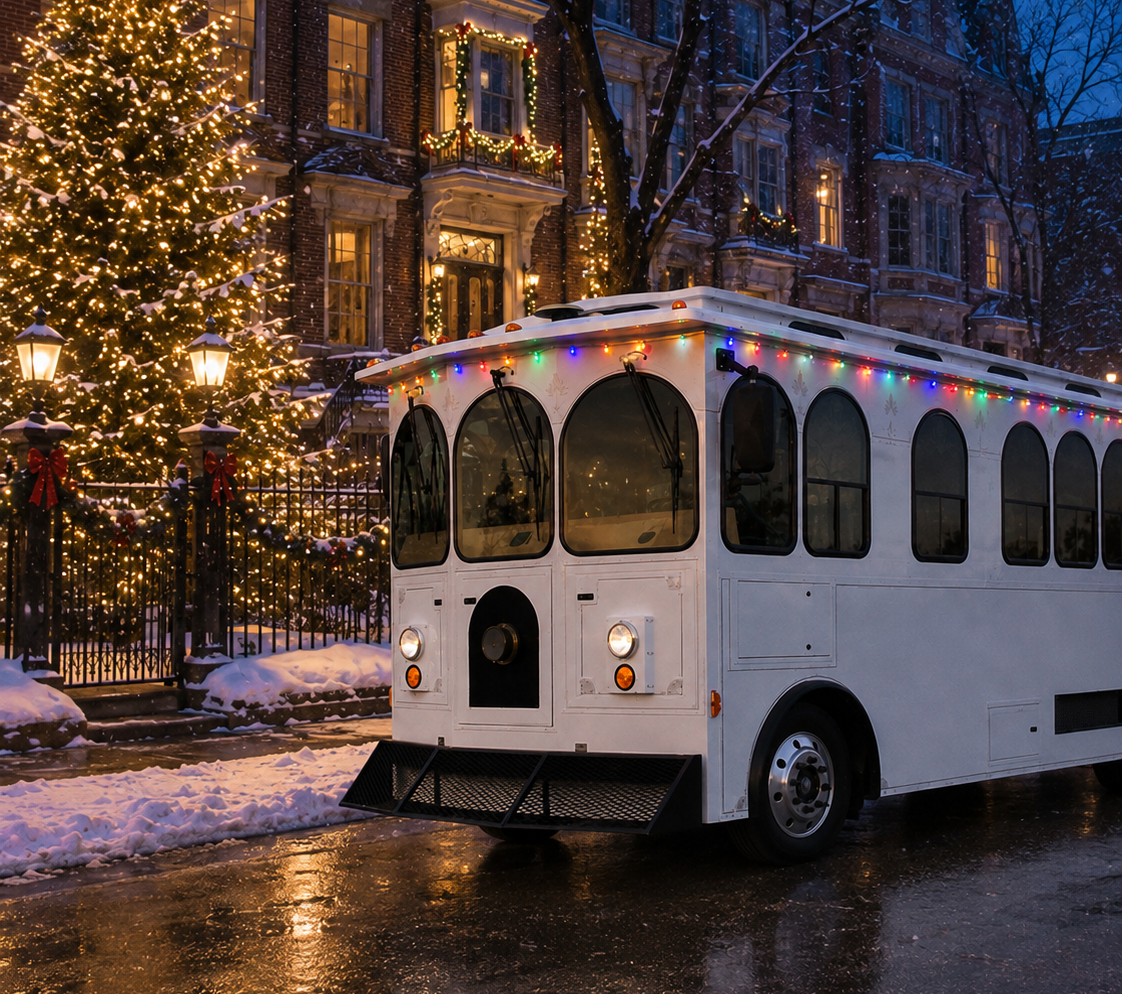
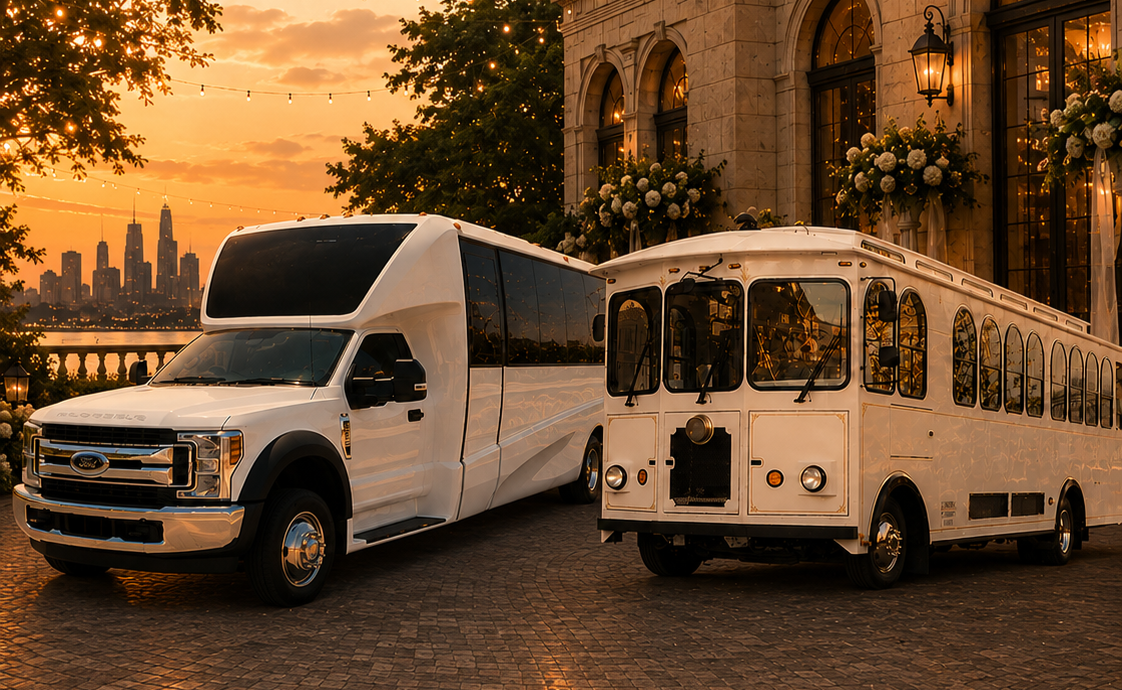
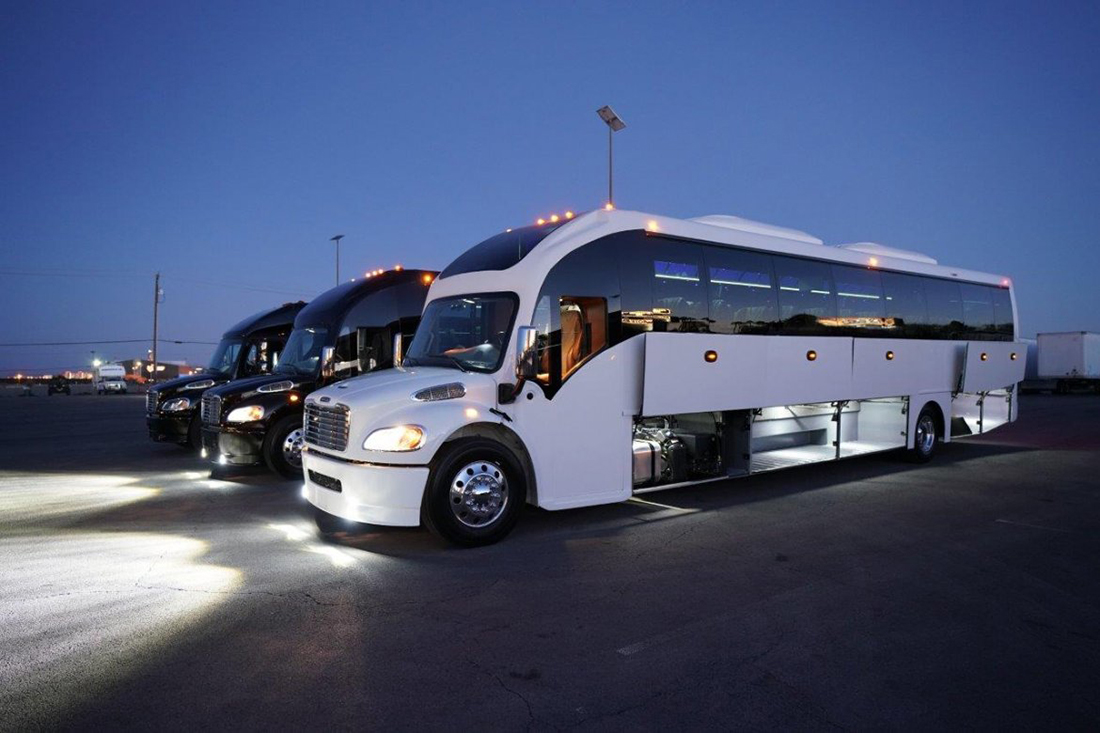
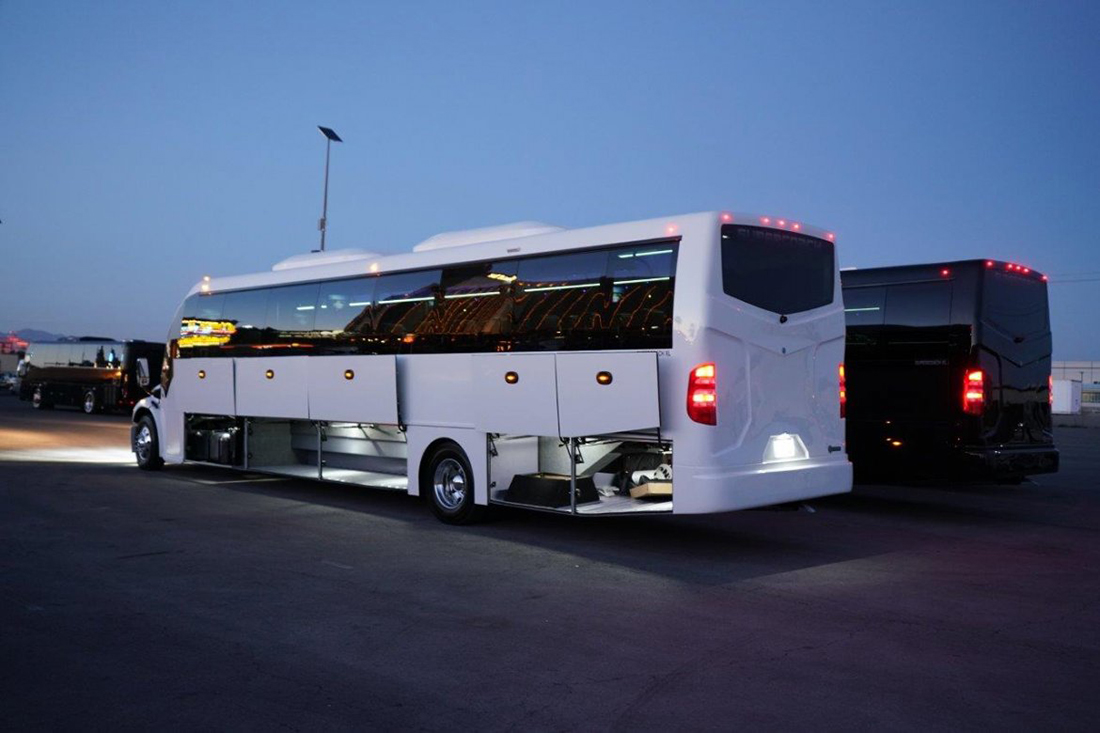
- Ceremony to reception gap: If there’s a cocktail hour or travel time between locations, this is when a Classic White Trolley often shuttles the wedding party for photos while a larger Super Coach Bus handles the broader guest transfer in parallel.
- Reception arrival: Guests dropped directly at the entrance, ideally timed to arrive 10–15 minutes ahead of the wedding party’s grand entrance.
- End of night: One or more return shuttles to the hotel, timed either as a single departure or staggered runs (more on this below).
When the day calls for separate wedding-party and guest movements, our wedding trolley transportation options show how the trolley and coach can work together.
Hotel Pickups: Fewer Locations Beat More Convenience
It’s tempting to arrange pickups at every hotel your guests are staying in, but each additional stop adds real time to the route — and multiplies the chances of a guest not being downstairs when the shuttle arrives. Where possible, consolidate your room block into one or two hotels, or ask guests staying elsewhere to meet at a single central pickup point.
If multiple pickups are unavoidable, build in a firm 5-minute window per stop and communicate it clearly — “the shuttle will wait no more than 5 minutes at each hotel” sets an expectation that keeps the whole schedule from sliding.
Communicating Logistics to Guests
A perfect shuttle schedule is only useful if guests actually know about it. The transportation details that matter most to communicate in advance:
- Exact pickup time and location — not “around 3:30,” but “3:30 p.m. sharp at the Marriott main lobby entrance.”
- How many trips are running, if it’s not a single shuttle for everyone.
- Whether there’s a return shuttle, and when it departs — this is the detail guests ask about most at the reception itself.
- A day-of contact number in case someone misses the pickup.
Wedding websites, welcome bags, and a simple card at each place setting are all good channels — the goal is that no guest is asking a bridesmaid “wait, how are we getting back?” at 10 p.m.
Common Mistakes Couples Make
- Not planning the return trip. Couples often plan the arrival shuttle in detail and treat the return as an afterthought. It deserves equal planning — arguably more, since guests are more spread out and less punctual at the end of the night.
- One mass exit instead of staggered departures. If your reception ends at 11 p.m. and everyone tries to leave in the same ten minutes, a single shuttle can’t move fast enough. Staggering return trips every 30–45 minutes (or running two smaller vehicles instead of one large one) keeps the line moving.
- Underestimating boarding time. Getting 40 guests seated takes longer than it sounds, especially with mobility differences, formalwear, and a drink in hand. Add 5–10 minutes of pure boarding buffer to every departure.
- Booking transportation too late. Popular wedding dates — especially Saturdays from May through October — can book vehicles six to twelve months out. If your date and vehicle size are firm, request a quote early rather than assuming availability closer to the day.
When to Book Relative to Your Wedding Date
As a general guideline: lock in your transportation as soon as your venue and guest count estimate are settled, ideally 6–12 months ahead for peak season weekends, and at least 8–10 weeks out for off-peak dates. Finalize your exact timeline and pickup locations closer to the day — typically 2–3 weeks out — once your final guest count and hotel block are confirmed.
If you’re still working out how many vehicles your guest list actually requires, our guide to how many guests fit in a trolley is a useful starting point before you lock in a timeline around the wrong vehicle size.
Bringing It All Together
A wedding transportation timeline doesn’t need to be complicated — it needs fixed anchor points, realistic buffer time, consolidated pickups, and a clear plan for the return trip. Build it backward from your ceremony and reception times, communicate it clearly to guests, and the shuttle becomes one less thing anyone has to think about on the day itself.
Ready to put a timeline together for your date? Share your venues, guest count, and hotel block with us and we’ll help map out a shuttle schedule that actually holds up.