How Many Guests Fit in a Trolley? A Wedding Transportation Sizing Guide
Transportation is one of the last things most couples plan and one of the first things guests notice. Get the sizing right and nobody thinks about it twice — everyone climbs aboard, the doors close, and the day keeps moving. Get it wrong, and you’re either paying for empty seats or leaving half the wedding party standing on a curb. Here’s how to figure out exactly what you need before you request a quote.
Know Your Head Count Before You Shop
Before comparing vehicles, separate your transportation needs into distinct groups, because they rarely travel together:
- The wedding party — you, your partner, the bridal party, and immediate family who need to be at the ceremony site early and the reception on time.
- Out-of-town guests — typically shuttled from a hotel block to the ceremony and reception.
- The full guest list — relevant if you’re offering a shuttle from the reception venue back to a hotel at the end of the night, especially if alcohol is being served.
Most couples only need to solve for one or two of these groups, not all three. A 30-person wedding party ride is a very different vehicle than a 150-guest hotel shuttle running multiple loops.
Capacity at a Glance: Trolley vs. Coach Bus vs. Limo Van
| Vehicle | Typical Capacity | Best For |
|---|---|---|
| Limo Van | Up to 14 passengers | Small parties, immediate family, executive airport runs |
| Classic White Trolley | 30 passengers | Wedding party, ceremony-to-reception transfers, photo stops |
| White Limo Trolley | 36 passengers | Wedding parties that prefer circular, group-facing seating |
| Super Coach Bus | Up to 57 passengers | Full guest shuttles, hotel pickups, out-of-town groups |
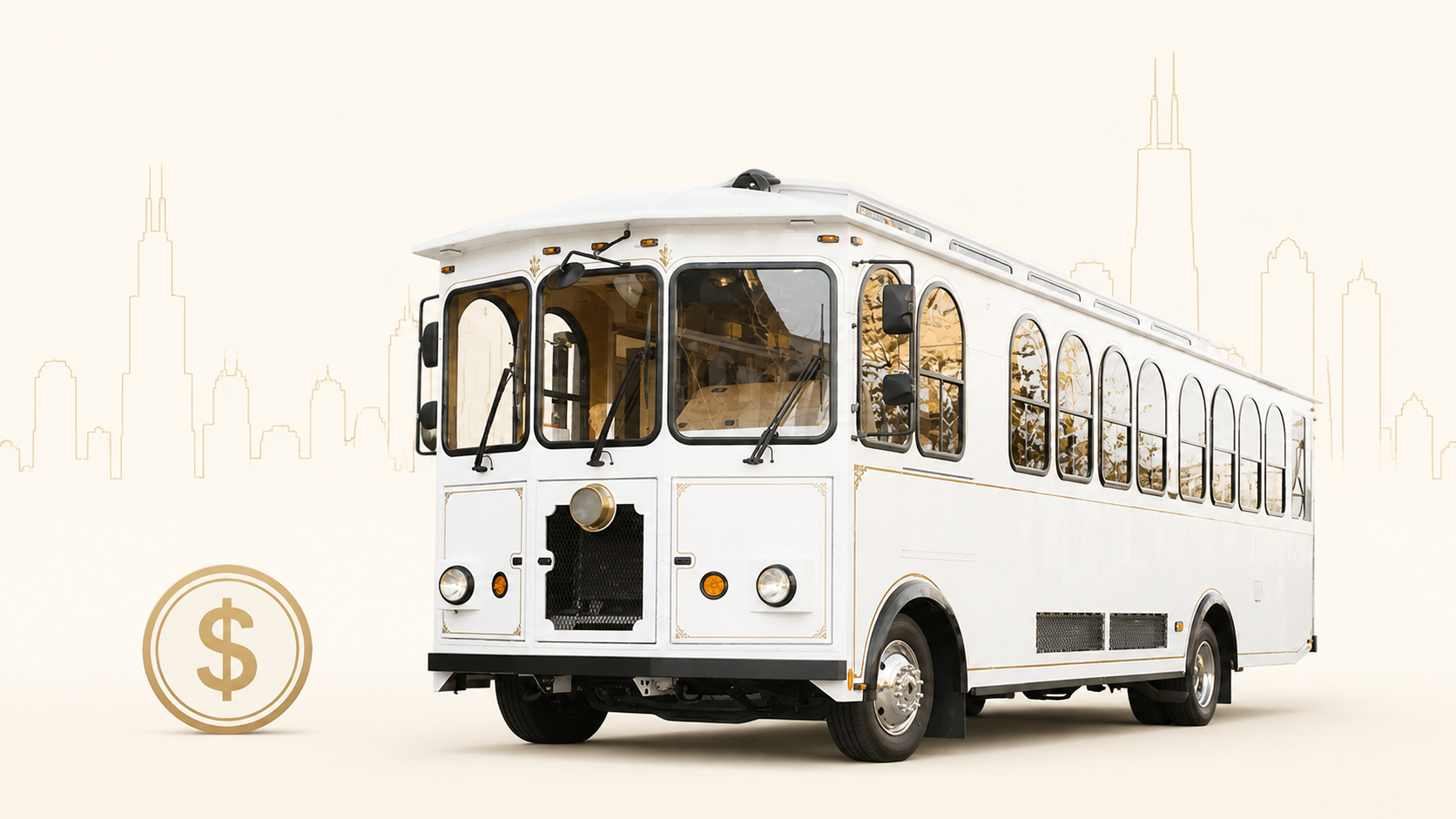
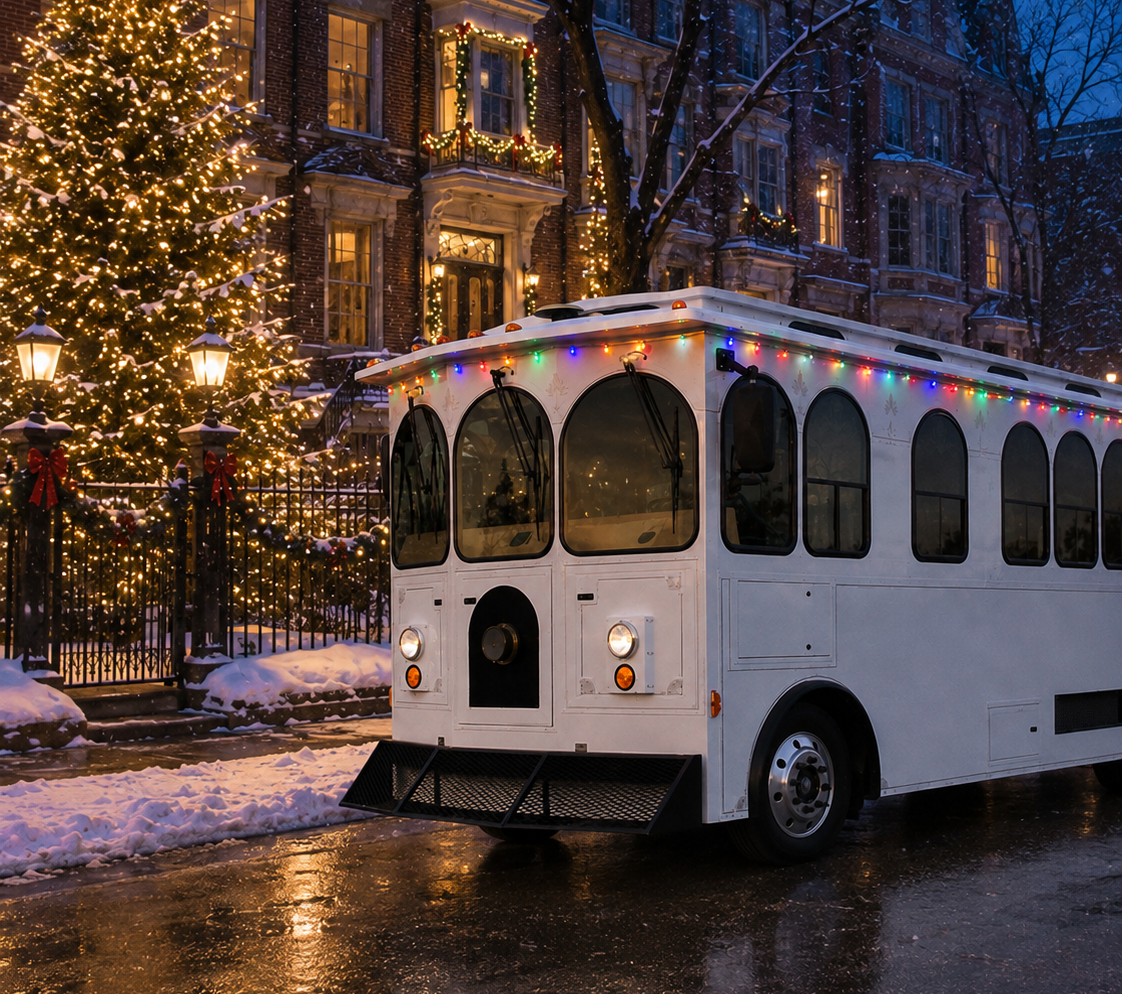
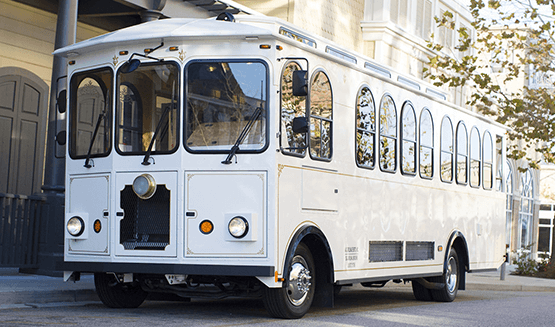
A Classic White Trolley seats 30 passengers and uses forward-facing rows for a familiar, orderly layout. For groups that prefer a more social cabin, the White Limo Trolley seats 36 passengers and uses circular perimeter seating so riders can face one another.
Once you know your passenger count, use the Chicago trolley rental cost guide to compare starting prices and work out a budget per rider. The guide also explains how rental length and the itinerary affect your quote.
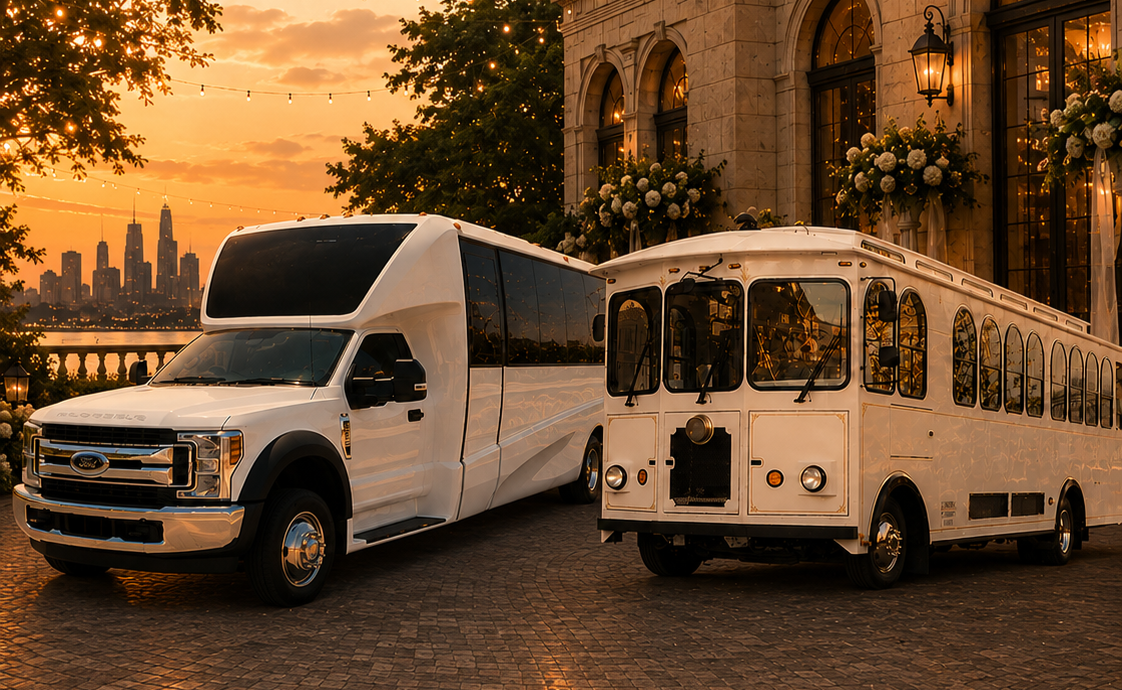
Once the guest list climbs past 40 or 50 people, a single trolley starts to feel tight, and that’s usually the point where couples add a Super Coach Bus to the plan — one vehicle for the wedding party’s photo-friendly ride, and one larger coach handling the guest shuttle in parallel. For smaller, more intimate arrangements — a small immediate-family ride, or an executive airport transfer for out-of-town parents — a Limo Van is often the more efficient (and more affordable) choice.
How to Estimate Your Guest Count Needs
A few rules of thumb that hold up across most weddings we work on:
- Count RSVPs, not invitations. Invitation lists are always bigger than the people who actually show up and need a ride. Wait until RSVPs are in before locking a vehicle size.
- Subtract the locals. Guests driving in from twenty minutes away rarely need a shuttle. Your real shuttle count is usually your out-of-town block plus anyone without a car at the venue.
- Add 10% for plus-ones and last-minute changes. It’s easier to have a couple of empty seats than to turn a guest away at the door.
- Ask your venue about parking. If parking is limited or valet-only, more guests will opt into the shuttle than you’d expect — plan capacity accordingly.
Splitting Wedding Party vs. Guest Shuttles
One of the most common mistakes we see is couples trying to put everyone — wedding party and guests — into a single vehicle “to keep it simple.” In practice, this usually means the wedding party is stuck waiting around for a bus that’s also picking up guests from three different hotels.
The cleaner approach: book a smaller, photo-worthy vehicle (trolley or limo van) exclusively for the wedding party’s schedule — ceremony arrival, post-ceremony photos, reception entrance — and a separate, larger vehicle for the broader guest shuttle running on its own loop. It costs more than one shared vehicle, but it removes the single biggest source of wedding-day transportation stress: waiting.
Couples comparing vehicle combinations can explore our Chicago wedding trolley rental options before matching each ride to the timeline.
Timing Considerations: One Big Vehicle or Multiple Trips?
If your guest count sits right on the edge between two vehicle sizes, the deciding factor is usually timing, not just seats.
- One large vehicle, one trip is simplest when everyone needs to arrive at roughly the same time — for example, a hotel-to-ceremony run before a fixed start time.
- Multiple smaller trips make sense when there’s flexibility in arrival windows, or when you want the wedding party to arrive separately from guests for a grand entrance effect.
- Return trips at night deserve their own plan. A shuttle that ran perfectly at 4 p.m. can bottleneck at 11 p.m. if everyone tries to leave the reception in the same twenty-minute window — consider staggering return departures every 30–45 minutes rather than one mass exit.
For a full breakdown of how to build out arrival and departure windows across an entire wedding day, our guide to wedding day shuttle logistics and timeline planning walks through the schedule in more detail.
Getting It Right the First Time
The short version: count your real riders (not your invitation list), decide whether the wedding party and guest shuttle need to be separate vehicles, and size for your peak moment — usually the reception exit — rather than your average headcount. From there, the vehicle choice tends to make itself obvious.
Still not sure which combination fits your day? Tell us your guest count and timeline and we’ll recommend a setup — including whether pairing a trolley with a coach makes sense for your numbers.